Evaluating the Laser Cut Cable Organiser SVG for Digital Fabrication
In the realm of digital fabrication and home organization, maintaining a tidy workspace is a common challenge. As the number of electronic devices increases, so does the clutter of charging cables and cords. The Laser Cut Cable Organiser SVG has emerged as a practical solution for makers, crafters, and homeowners looking to create custom storage solutions. This digital file format allows users to produce physical cable holders using various cutting technologies, offering a blend of functionality and aesthetic customization. Understanding the capabilities, limitations, and ideal use cases for this specific design is essential for anyone considering it for their next project.
Understanding the Design and Technical Specifications
A Laser Cut Cable Organiser SVG is a vector-based digital file that contains the precise cut lines required to fabricate a cable management device. Unlike raster images, vector files such as SVG, AI, EPS, and DXF allow for infinite scalability without loss of quality, ensuring that cut lines remain sharp regardless of the final size. This particular design is engineered specifically for material with a thickness of 6 mm. This specification is critical because it dictates the structural integrity and assembly method of the final product.
The design typically involves interlocking parts or slots that hold cables in place. Because it is optimized for 6 mm materials, it works well with standard plywood, acrylic, or MDF sheets commonly available at hardware stores or specialized suppliers. The inclusion of multiple file formats—AI, EPS, SVG, DXF, and PNG—ensures compatibility with a wide range of software and hardware. For instance, SVG and DXF files are universally accepted by laser cutters and CNC machines, while AI and EPS files are preferred by users working in Adobe Illustrator or CorelDRAW for further customization before cutting.
Compatibility with Cutting Technologies
One of the primary advantages of this digital asset is its versatility across different fabrication tools. It is suitable for:
- Laser Cutters: Machines like the Glowforge or industrial CO2 lasers can cut through wood and acrylic with high precision, following the vector paths exactly.
- Cricut and Silhouette Machines: While primarily designed for paper and vinyl, these machines can handle thicker materials like chipboard or balsa wood if the design is scaled appropriately, though the 6 mm specification suggests laser or CNC is the primary intended method.
- CNC Routers: For those working with harder woods or plastics, a CNC machine can carve out the shapes with robust durability.
- Layered Paper Crafts: By scaling down the design and using layered cardstock, crafters can create decorative, non-functional models or lightweight organizers for thinner cables.
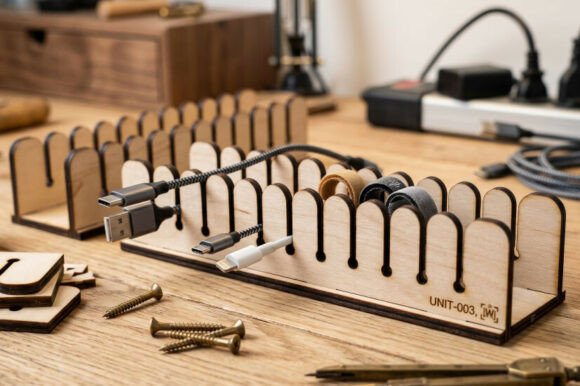
The realistic 3D mockup style often seen in previews helps users visualize the final assembled product. This visual aid is crucial for understanding how the flat pieces come together to form a three-dimensional object, reducing the guesswork during the assembly phase.
Benefits and Customization Potential
The core benefit of using a Laser Cut Cable Organiser SVG lies in customization. Unlike mass-produced plastic cable clips, which offer limited color and style options, a DIY approach allows for complete creative control. Users can select materials that match their desk setup, such as walnut wood for a warm, professional look or clear acrylic for a modern, minimalist aesthetic. Furthermore, the ease of customization means that users can modify the design in vector software to add personal touches, such as monograms, logos, or decorative patterns, before cutting.
Another significant advantage is cost-effectiveness. Once the digital file is acquired, the marginal cost of producing additional organizers is limited to the price of the raw material. This makes it an attractive option for small businesses looking to sell handmade organizational products or for individuals who need multiple units for a home office setup.
Tradeoffs and Practical Considerations
While the benefits are clear, there are tradeoffs to consider. The requirement for 6 mm material thickness is both a strength and a limitation. On one hand, it ensures sturdiness; on the other, it restricts the type of materials that can be used. Thin cardboard or standard printer paper will not work for the intended structural purpose. Users must source specific materials, which may require additional time and expense.
Additionally, the assembly process requires attention to detail. Interlocking designs often rely on friction fits, which means the kerf (the width of the cut made by the laser or blade) must be accounted for. If the laser settings are not calibrated correctly, the pieces may fit too loosely or too tightly. Beginners may need to perform test cuts to adjust power and speed settings, adding to the initial learning curve.
Another consideration is the capacity of the organizer. Most single-unit designs hold a limited number of cables. For users with extensive setups involving dozens of cords, multiple units may need to be produced and arranged, which could consume significant desk space. Evaluating the number of cables needing organization before starting the project is a prudent step.
Ideal Use Cases
This design is a strong fit for several scenarios:
- Home Office Organization: Individuals seeking to reduce visual clutter on their desks will find this organizer both functional and decorative.
- Gift Making: The ability to customize makes it an excellent choice for personalized gifts for tech enthusiasts or colleagues.
- Educational Projects: Students learning about vector design and digital fabrication can use this file to understand how 2D designs translate into 3D objects.
- Small Business Inventory: Crafters selling at local markets or online platforms can use this design to create unique, handmade inventory items with low production costs.
When to Consider Alternatives
Despite its versatility, the Laser Cut Cable Organiser SVG may not be the best solution for everyone. Users who do not have access to a laser cutter, CNC machine, or compatible cutting plotter may find the barrier to entry too high. In such cases, purchasing pre-made plastic or silicone cable clips might be more practical and time-efficient.
Furthermore, if the primary goal is extreme portability or flexibility, rigid wood or acrylic organizers may not be suitable. Soft, flexible silicone ties or velcro straps are better suited for travel or temporary setups where rigidity is a disadvantage. Additionally, for users managing heavy-duty industrial cables, the 6 mm material thickness may not provide sufficient durability, and metal or heavy-duty plastic solutions would be more appropriate.
Making the Decision
Choosing whether to use a Laser Cut Cable Organiser SVG depends on your resources, skills, and specific needs. If you have access to digital fabrication tools and value customization, aesthetics, and the satisfaction of creating a functional item from scratch, this design offers a compelling option. It bridges the gap between utility and design, allowing for a personalized touch that off-the-shelf products cannot match.
However, if you lack the necessary equipment or prefer a quick, no-assembly solution, alternative organizational methods may serve you better. Assess your current workspace challenges, the tools at your disposal, and the time you are willing to invest in the project. By weighing these factors, you can determine if this digital file aligns with your goals for a tidier, more organized environment.